I'm not totally back in my routine because I still don't have a Flip'n Friday for today. Instead I thought I would share some production stills from a film that I made in graduate school. It starred two dancers from Greensboro; one is now dancing in L.A. here and the other teaches in Greensboro and has this lovely etsy shop where she sells clothes for children. This film was adapted from a short story that I wrote in high school.
Also if you want to watch a video of sorts check out this performance from the Avett Brothers. This song always gets in my head, but I love it, especially the line, "it's not the chase that I love, it's me following you." Don't ask me why.
Showing posts with label Narrative. Show all posts
Friday, September 24, 2010
Monday, August 2, 2010
Monday Film Class: Movement vs Genre
For the next month or so I will focus on a specific area of film studies so that I can delve a little deeper into films instead of attempting to cover huge areas in one post. I will be looking at the Film Noir movement of the 1940s and 1950s. Some may say, "Hold up! Isn't Film Noir a genre?" To this I disagree and to understand why we must first look at the difference between a movement and a genre.
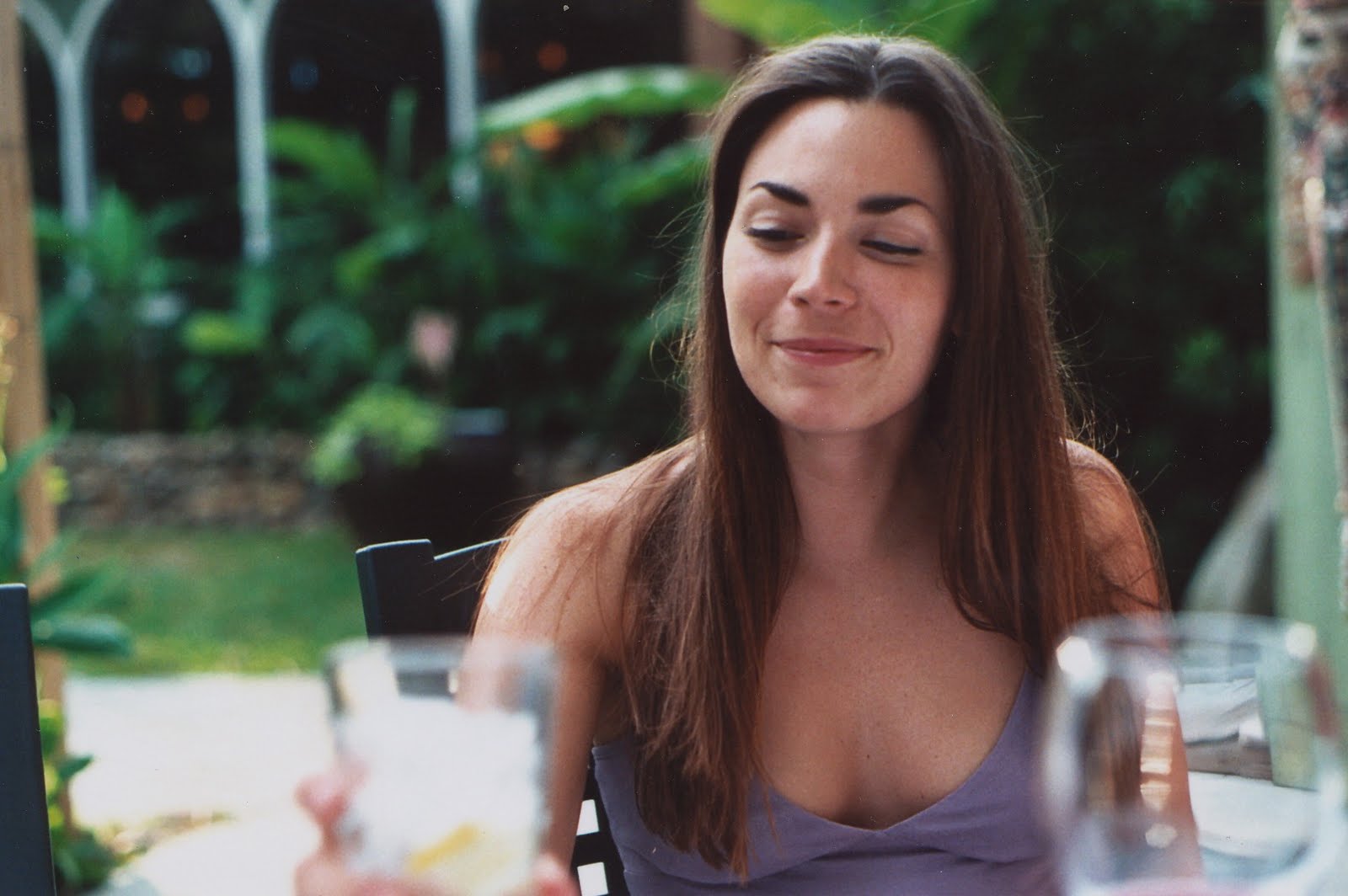
To accompany this post I pulled out some old photos that my husband took back in undergrad. In his photography class he did a Film Noir series and, yes, that is me posing in the photos many years ago. And that cigarette is just a prop.
Let's look at genre first. To simplify a genre is a way of categorizing films; yet if a film is a genre film it usually upholds certain stylistic/narrative/form rules. An easily identifiable genre is the romantic comedy or as some like to call it the romcom (isn't that cute?). To begin with I can think of many romcoms from many different decades (When Harry Met Sally, While You Were Sleeping, How to Lose a Guy in Ten Days, Miss Congeniality, etc.). Plot points in all of these films are strikingly similar: a man and a woman are introduced in the beginning, we want them to be together throughout, but, alas, the film keeps them apart until the very end when they realize that they are meant to be together. And we all rejoice when they kiss and breath a collective sigh of relief and a smile as we leave the theater. If this does not happen in the film then said film is not a romantic comedy. It may be a comedy or a perhaps a romance, but it's not a romantic comedy. There are a few other elements such as a big female star in the film (Julia Roberts, Sandra Bullock, Reese Witherspoon, usually the ones who are not great actresses, but big stars) and a somewhat unbelievable or whimsical plot.
Another easily recognizable genre is the western. Westerns have to take place, well, in the West, the American West that is. There is a battle of good vs bad with the good guy winning. The thing about genre films is that all you have to do is watch the film and you know that it belongs to that genre. You don't need to know anything about the director or when it was made or why it was made. The genre film stands alone.
So what is a movement then? Well, a movement is regulated to a specific time in history and is often reacting to an historic event or to a creatively stagnant film industry. While there are common elements in a movement not all the films necessarily adhere to the standards. Often the common elements have to do with the production of the films and not the finished product.
Since I have previously written about the French New Wave let's start with it. This movement really began with an article by Francois Truffaut titled "A Certain Tendency of the French Cinema," basically condoning the French Cinema at the time and throughout history to be fairly bland, boring, uninspired (with a few exceptions). The French New Wave constituted an immense amount of young, new, French filmmakers in the late 50s, early 60s. In a way they sort of woke up the French cinema. These filmmakers abandoned the idea of perfection and grandiose filmmaking. Instead they opted for small cameras, stylistic pieces, location shoots, and personal stories. To me there is real honesty in their films, which is magnified by how they really worked from the gut and took chances, embraced mistakes.
From my previous post there are two films that are synonymous of the New Wave: Breathless and The 400 Blows. If you were to casually watch these two films you would be hard pressed to find similarities that would put them into the same genre. Other than they are both French, take place in Paris, and shot in black and white. These similarities would include many, many films including the films that the French New Wave was rebelling against.
Breathless is very fast paced and stylistic. The characters are hip, the scene is hip. Danger becomes fun. Godard experiments with cutting and with improvisation. On the other hand, The 400 Blows is more evenly paced and examines a rebellious childhood. It's an incredibly personal film that explores the filmmakers own childhood. So here are two very different films comprising one cinematic movement. An era that moved cinema forward a step or two. To understand how the films are connected and why they are part of the same movement you need some outside information. You need to know about the directors and about what was going on in the world. You need to know about the state of French cinema, etc, etc.
There is no seminal moment that I know of that inspired the romcoms. Other than some executives in an office realizing that a large group of people will pay money to see films were two people who are meant to be together are kept apart for an entire film before finally getting together in the end. Some would say that the screwball comedies of the 30s and 40s were the beginning of the romcoms, but I think there are even early films. Sherlock Jr. for instance is a perfect romcom. So as with westerns the romcom genre may have just appeared out of nowhere and always existed.
Finally, let's look at Film Noir. There is a fairly well agreed upon time period when Film Noirs were made. It's often cited that Noir films began with The Maltese Falcon and ended with Touch of Evil. These films were made in response to two major happenings in the world and Hollywood. In the early 1940s America was dragged into WWII, a place we didn't want to be until of course we were attacked and had to defend our honor. This attack and our subsequent use of the atomic bomb scarred the American psyche and the art being made had to somehow reflect this change. Fred and Ginger needed to be balanced by something a little darker, something unknown. Therefore, noir films tend to examine the seedy underbelly of the world. The characters are far from perfect; they're drifters, murderers, detectives, criminals.
Secondly, the Hollywood production houses, most notoriously Warner Brothers, needed to save a little money. They realized that they could reuse sets if they lit the sets with a lot of shadows using low key lighting. So the style was created due to a specific need. Though, it was also greatly influenced by German Expressionism of the 1920s; in these films areas of light and shadow were often painted onto the sets. Film Noir just used shadows to create intensity on the sets and mask that the same set was being used over and over again.
While there are many characteristics of a Noir film they by no means apply to every Noir film (other than Noir films always being shot in black and white). Color was very expensive at that time and, thus, would have negated the cheap feel of Noir. They may also include some of the following elements: a voice over, a femme fatale (a woman whom brings down the male lead), the main character dying at the end, Humphrey Bogart (not really, but he does seem to show up in a lot of Noir films).
Now, some of you may have heard of the term Neo-Noir. These are films made after the initial Film Noir time period and they are often shot in color. This alone is a fairly significant departure from the original style. Yet, though these later films take a lot from the stylistic/narrative form of Film Noir they are often missing the paranoia and even the melodrama associated with the original movement. While these new films are clearly influenced by the original films they are not similar in the same way every western is clearly a western.
Movements are also continually influencing films, filmmakers, and, even, other movements. For instance Italian Neo-Realism influenced the French New Wave. German Expressionism influenced Film Noir and so on.
Of course in the coming weeks we will look more in depth at Film Noir by actually looking at some films. In the meantime I hope this helps to allow you to think about movement vs genre. If you still think that Film Noir is a genre, I would love to hear your argument. I am always open to a well supported opinion. Also, remember that not all films have to belong to a movement or a genre, plenty of films exist outside of any type of box. So don't try to stick them in one. For instance just because a film has a female lead that does not automatically make it a romcom (for the record I consider romcoms and chick flicks to be the same thing, but that is an entirely new post).
To accompany this post I pulled out some old photos that my husband took back in undergrad. In his photography class he did a Film Noir series and, yes, that is me posing in the photos many years ago. And that cigarette is just a prop.
Let's look at genre first. To simplify a genre is a way of categorizing films; yet if a film is a genre film it usually upholds certain stylistic/narrative/form rules. An easily identifiable genre is the romantic comedy or as some like to call it the romcom (isn't that cute?). To begin with I can think of many romcoms from many different decades (When Harry Met Sally, While You Were Sleeping, How to Lose a Guy in Ten Days, Miss Congeniality, etc.). Plot points in all of these films are strikingly similar: a man and a woman are introduced in the beginning, we want them to be together throughout, but, alas, the film keeps them apart until the very end when they realize that they are meant to be together. And we all rejoice when they kiss and breath a collective sigh of relief and a smile as we leave the theater. If this does not happen in the film then said film is not a romantic comedy. It may be a comedy or a perhaps a romance, but it's not a romantic comedy. There are a few other elements such as a big female star in the film (Julia Roberts, Sandra Bullock, Reese Witherspoon, usually the ones who are not great actresses, but big stars) and a somewhat unbelievable or whimsical plot.
Another easily recognizable genre is the western. Westerns have to take place, well, in the West, the American West that is. There is a battle of good vs bad with the good guy winning. The thing about genre films is that all you have to do is watch the film and you know that it belongs to that genre. You don't need to know anything about the director or when it was made or why it was made. The genre film stands alone.
So what is a movement then? Well, a movement is regulated to a specific time in history and is often reacting to an historic event or to a creatively stagnant film industry. While there are common elements in a movement not all the films necessarily adhere to the standards. Often the common elements have to do with the production of the films and not the finished product.
Since I have previously written about the French New Wave let's start with it. This movement really began with an article by Francois Truffaut titled "A Certain Tendency of the French Cinema," basically condoning the French Cinema at the time and throughout history to be fairly bland, boring, uninspired (with a few exceptions). The French New Wave constituted an immense amount of young, new, French filmmakers in the late 50s, early 60s. In a way they sort of woke up the French cinema. These filmmakers abandoned the idea of perfection and grandiose filmmaking. Instead they opted for small cameras, stylistic pieces, location shoots, and personal stories. To me there is real honesty in their films, which is magnified by how they really worked from the gut and took chances, embraced mistakes.
From my previous post there are two films that are synonymous of the New Wave: Breathless and The 400 Blows. If you were to casually watch these two films you would be hard pressed to find similarities that would put them into the same genre. Other than they are both French, take place in Paris, and shot in black and white. These similarities would include many, many films including the films that the French New Wave was rebelling against.
Breathless is very fast paced and stylistic. The characters are hip, the scene is hip. Danger becomes fun. Godard experiments with cutting and with improvisation. On the other hand, The 400 Blows is more evenly paced and examines a rebellious childhood. It's an incredibly personal film that explores the filmmakers own childhood. So here are two very different films comprising one cinematic movement. An era that moved cinema forward a step or two. To understand how the films are connected and why they are part of the same movement you need some outside information. You need to know about the directors and about what was going on in the world. You need to know about the state of French cinema, etc, etc.
There is no seminal moment that I know of that inspired the romcoms. Other than some executives in an office realizing that a large group of people will pay money to see films were two people who are meant to be together are kept apart for an entire film before finally getting together in the end. Some would say that the screwball comedies of the 30s and 40s were the beginning of the romcoms, but I think there are even early films. Sherlock Jr. for instance is a perfect romcom. So as with westerns the romcom genre may have just appeared out of nowhere and always existed.
Finally, let's look at Film Noir. There is a fairly well agreed upon time period when Film Noirs were made. It's often cited that Noir films began with The Maltese Falcon and ended with Touch of Evil. These films were made in response to two major happenings in the world and Hollywood. In the early 1940s America was dragged into WWII, a place we didn't want to be until of course we were attacked and had to defend our honor. This attack and our subsequent use of the atomic bomb scarred the American psyche and the art being made had to somehow reflect this change. Fred and Ginger needed to be balanced by something a little darker, something unknown. Therefore, noir films tend to examine the seedy underbelly of the world. The characters are far from perfect; they're drifters, murderers, detectives, criminals.
Secondly, the Hollywood production houses, most notoriously Warner Brothers, needed to save a little money. They realized that they could reuse sets if they lit the sets with a lot of shadows using low key lighting. So the style was created due to a specific need. Though, it was also greatly influenced by German Expressionism of the 1920s; in these films areas of light and shadow were often painted onto the sets. Film Noir just used shadows to create intensity on the sets and mask that the same set was being used over and over again.
While there are many characteristics of a Noir film they by no means apply to every Noir film (other than Noir films always being shot in black and white). Color was very expensive at that time and, thus, would have negated the cheap feel of Noir. They may also include some of the following elements: a voice over, a femme fatale (a woman whom brings down the male lead), the main character dying at the end, Humphrey Bogart (not really, but he does seem to show up in a lot of Noir films).
Now, some of you may have heard of the term Neo-Noir. These are films made after the initial Film Noir time period and they are often shot in color. This alone is a fairly significant departure from the original style. Yet, though these later films take a lot from the stylistic/narrative form of Film Noir they are often missing the paranoia and even the melodrama associated with the original movement. While these new films are clearly influenced by the original films they are not similar in the same way every western is clearly a western.
Movements are also continually influencing films, filmmakers, and, even, other movements. For instance Italian Neo-Realism influenced the French New Wave. German Expressionism influenced Film Noir and so on.
Of course in the coming weeks we will look more in depth at Film Noir by actually looking at some films. In the meantime I hope this helps to allow you to think about movement vs genre. If you still think that Film Noir is a genre, I would love to hear your argument. I am always open to a well supported opinion. Also, remember that not all films have to belong to a movement or a genre, plenty of films exist outside of any type of box. So don't try to stick them in one. For instance just because a film has a female lead that does not automatically make it a romcom (for the record I consider romcoms and chick flicks to be the same thing, but that is an entirely new post).
Friday, July 23, 2010
Flip'n Friday: Searching
Searching from Chelsea Wayant on Vimeo.
This weeks video was shot at an old junk store on Elm Street in Greensboro. I have been looking for a chair for my desk for a long time and my sister and I thought we'd check this place out. I don't even know if it has a name. My sister had been there before and suggested that I shoot some footage there. It's an insane place. When they took down the chair that I was interested in the entire pile of junk almost fell on top of my sister. Luckily, we got out unscathed with a chair and interesting footage to boot.
Monday, July 19, 2010
Monday Film Class: Nicole Holofcener
Last Thursday my sister watched my daughter so that my husband and I could go see the new Nicole Holofcener film, Please Give. After watching the trailer we had considered seeing the film for our anniversary last month, but decided against it because it was only playing in Winston-Salem and I preferred to stay in Greensboro. This week I though I would write about Holofcener both to recommend seeing the film in theater, projected on film of course, and to introduce a filmmaker that you may not be familiar.
Interestingly, Catherine Keener has played a major role in all four of Holofcener’s feature length films. It makes one wonder if the characters Keener plays are surrogates for Holofcener. When a director writes characters that are similar to themselves I often refer to them as the director’s Antoinel Doinel. Doinel is the main character in a series of films by Francois Truffaut that begins with the 400 Blows, which is a semi-autobiographical film about Truffaut’s childhood. As the series progresses and Doinel ages the character becomes more of an amalgamation of the Jean-Pierre Leaud (the actor portraying Doinel) and Truffaut himself. Of course Truffaut is not the only one to have done this nor the first, but it is very successful pairing that extended over many films. Now, I don’t know for sure that Holofcener uses herself as the blueprint for Keener’s characters, but it is something I have always wondered. Though Keener’s characters are not carbon copies of each other they all have a similar make up involving a somewhat neurotic and needy nature.
Today I have had a hard time sitting down at the computer to a write this post and am now in the eleventh hour. All day I have been trying to think about why Holofcener is a relevant director. It is not often that films portray women in the central roles in a film and it is even rarer that films with lead female characters are not romantic comedies (where the women are usually portrayed as searching for or needing a man in their lives). Holofcener is one of the rare directors making films about women without relying on stereotypes or using female characters to sell designer shoes. She does this by creating very personal films that are far from the normal high concept big budget Hollywood fare. She allows the women to have real flaws and dimension.
Upon leaving the theater I thought Please Give was good, but not as well executed as some of Holofcener’s other films, but now I am not sure, the more I think about the film the more I appreciate it. That’s the thing with her films there is never a pat, easy ending, nothing is force fed. The character’s were all incredibly well written. My husband really loves the grandmother and thought she was a particular stand out. I agree with him, but I was also impressed with Amanda Peet, she plays a bitch very well.
I show Holofcener’s Lovely and Amazing in my Women and Film class and students are often very divided on the film. Often they want a concrete conclusion and feel as though the film just ends. This semester, due to some films being misplaced during a move to a new building, I showed the film much earlier than normal. At first the film had some of the same complaints, but as the semester moved along it became the film that everyone referenced and compared subsequent films.
{source}
Holofcener is a writer/director whom often makes films revolving around females and the issues facing them. She is does this in a very honest manner without overtly glamorizing women akin to Sex and the City type fare.Interestingly, Catherine Keener has played a major role in all four of Holofcener’s feature length films. It makes one wonder if the characters Keener plays are surrogates for Holofcener. When a director writes characters that are similar to themselves I often refer to them as the director’s Antoinel Doinel. Doinel is the main character in a series of films by Francois Truffaut that begins with the 400 Blows, which is a semi-autobiographical film about Truffaut’s childhood. As the series progresses and Doinel ages the character becomes more of an amalgamation of the Jean-Pierre Leaud (the actor portraying Doinel) and Truffaut himself. Of course Truffaut is not the only one to have done this nor the first, but it is very successful pairing that extended over many films. Now, I don’t know for sure that Holofcener uses herself as the blueprint for Keener’s characters, but it is something I have always wondered. Though Keener’s characters are not carbon copies of each other they all have a similar make up involving a somewhat neurotic and needy nature.
Today I have had a hard time sitting down at the computer to a write this post and am now in the eleventh hour. All day I have been trying to think about why Holofcener is a relevant director. It is not often that films portray women in the central roles in a film and it is even rarer that films with lead female characters are not romantic comedies (where the women are usually portrayed as searching for or needing a man in their lives). Holofcener is one of the rare directors making films about women without relying on stereotypes or using female characters to sell designer shoes. She does this by creating very personal films that are far from the normal high concept big budget Hollywood fare. She allows the women to have real flaws and dimension.
Upon leaving the theater I thought Please Give was good, but not as well executed as some of Holofcener’s other films, but now I am not sure, the more I think about the film the more I appreciate it. That’s the thing with her films there is never a pat, easy ending, nothing is force fed. The character’s were all incredibly well written. My husband really loves the grandmother and thought she was a particular stand out. I agree with him, but I was also impressed with Amanda Peet, she plays a bitch very well.
I show Holofcener’s Lovely and Amazing in my Women and Film class and students are often very divided on the film. Often they want a concrete conclusion and feel as though the film just ends. This semester, due to some films being misplaced during a move to a new building, I showed the film much earlier than normal. At first the film had some of the same complaints, but as the semester moved along it became the film that everyone referenced and compared subsequent films.
Tuesday, July 13, 2010
The Cool Down
We have finally had some rain, which cooled down our high 90s weather. Thank goodness. Today I am hoping to make it downtown to visit one of my students art exhibits. My daughter is fast asleep so we will leave whenever she wakes up.
It gives me the time to listen to some of Tift Merritt's radio show The Spark (check out the archive, pretty impressive roster). She has a great interview with Darren Jessee, whom is a wonderful musician and person. He has great comments on the creative process. I met him once, years ago, when I was working at a coffee shop in Chapel Hill. He came in a lot and I never saw him only heard about from the other barista. It was a hot day when he came in and I had the door open and I had my back to the door. I turned around and he was just standing there, at the register, and I almost lost my balance and sputtered out, "Darren Jessee..." He smiled and I gave him his coffee. I was so embarrassed, but he was nice about it.
My film Drowning Slowly is named after a Ben Folds Five Song and it closes with a Hotel Lights song. Darren Jessee was the most famous person we approached about using a song and he was the most awesome about it and didn't try to fleece us for money (that we did not have, we made the movie for $3000). So check out the interview and his two albums: Hotel Lights and Firecracker People.
It gives me the time to listen to some of Tift Merritt's radio show The Spark (check out the archive, pretty impressive roster). She has a great interview with Darren Jessee, whom is a wonderful musician and person. He has great comments on the creative process. I met him once, years ago, when I was working at a coffee shop in Chapel Hill. He came in a lot and I never saw him only heard about from the other barista. It was a hot day when he came in and I had the door open and I had my back to the door. I turned around and he was just standing there, at the register, and I almost lost my balance and sputtered out, "Darren Jessee..." He smiled and I gave him his coffee. I was so embarrassed, but he was nice about it.
My film Drowning Slowly is named after a Ben Folds Five Song and it closes with a Hotel Lights song. Darren Jessee was the most famous person we approached about using a song and he was the most awesome about it and didn't try to fleece us for money (that we did not have, we made the movie for $3000). So check out the interview and his two albums: Hotel Lights and Firecracker People.
Monday, July 12, 2010
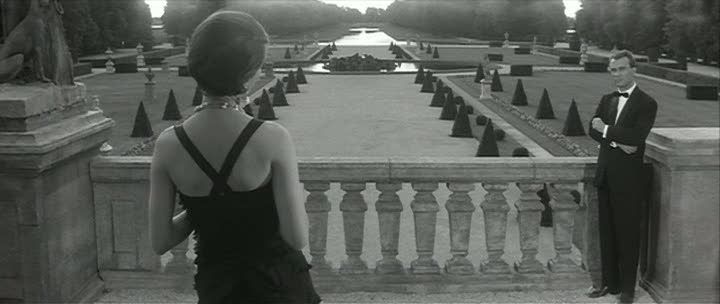
Monday Film Class: Last Year at Marienbad
I finally watched (or rewatched, the first viewing being in 1996) Last Year at Marienbad. Before I discuss the film itself let me give some background. The director, Alain Resnais, is associated with the French New Wave movement or La Nouvelle Vague. Of course the most prominent members of this movement are Jean-Luc Godard and Francois Truffaut. For those making a list of important films to watch you must include The 400 Blows (Truffaut) and Breathless (Godard). They are the truly defining films of this movement and The 400 Blows in particular is one of my favorite films. The French New Wave is truly independent filmmaking at its finest. Beyond that, though, the filmmakers were attempting to wake up cinema audiences. They were not concerned with allowing an audience suspend their disbelief and forget that they were watching a movie. Instead, they wanted the audience to always be aware that they are watching a constructed reality, a piece of art.

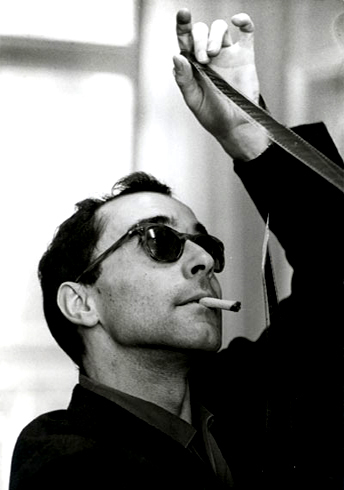
{Godard, Source} {Truffaut, Source}
For instance they often use tracking shots that are way too long and make an audience uncomfortable or using a freeze frame at the end of the film so that all movement ceases and often the main character captured in a defining moment (of course now this technique is often used in a rather banal manner making it rather cliche). This was first used in The 400 Blows as a means to trap the main character and reflect on how he is caged and has nowhere left to go, thus using a cinematic technique to comment directly on a character. Godard used jump cuts (when a piece of the action is missing from a continuous shot making the image appear to jerk or jump) as a way to shorten his film, but it was also a means to constantly remind viewers that they were watching a film and had not been carried away to some other world. They are not a fly on someones wall, but instead a patron sitting in a theater.
The French New Wave is such a wonderful and influential period of filmmaking and I can only begin to touch on it here. Even though now many of the techniques that they used in their films can be considered somewhat mainstream, the thought behind the technique has often been lost. When you go back and watch these films you can see what they were trying to accomplish more clearly. At times it can be uncomfortable to watch (not violent or sexual, but more 'what in the world is going on?'), but stick with the films and you will be rewarded.
Now onto Last Year at Marienbad. Resnais is considered to be in a subset of the French New Wave often referred to as the Left Bank. These filmmakers, which also includes Chris Marker (La Jetee) and Agnes Varda (Cleo From 5 to 7), were the more artsy fringe of the movement. Though the French New Wave as a whole was interested in challenging tradition in cinema the left bank really pushed the envelope. While Godard and Truffaut were film critics taking the leap into filmmaking somewhat as a way to test their theories, the Left Bank contingency was made up more of artists. Their films sometimes even veered into experimental filmmaking.
To use a contemporary comparison trying to make sense of the plot or structure of Last Year at Marienbad is like trying to make sense of the television series Lost; when it comes down to it structural clarity is not necessarily the point. And believe me Lost is a cakewalk compared to Marienbad. Resnais is particularly interested in memory and his most famous films (Night and Fog, Hiroshima Mon Amour, Marienbad) explore the manner in which we store our most heinous memories be they personal or collective. For instance Night and Fog tackles The Holocaust and if land can maintain memory. Resnais brings his camera to concentration camps a decade after they were liberated and juxtaposes the modern footage with archival footage of the camps, thus taking leaps from the present to the past and back again. I first watched this film in 8th grade and the images, the sound of the narrator, were burned into my own memory. The two images that stayed with me most vibrantly was one of bodies being bulldozed (a painful image, but necessary) and one of the modern grown over fence cutting through a green landscape.
It is easy to write off Marienbad as weird and unfocused because it demands so much from its viewers. This is not an easy, popcorn film. All of the characters walk through the film in a daze, with little emotion to guide the viewer. Plot points and characters, who are never even named, are vague and barely developed. When watching the film you shouldn't try to make sense of it all, but experience it. Whatever you think is happening, is happening in some way, allow your mind to fill in the spaces. There is not a right or wrong in this film.
This may be a hard film to watch, but it will stay with you as you ponder what it all means. You will benefit from multiple viewings, don't be scared to watch it twice. Sometimes when I watch films like this I get put into this dreamy, half asleep state that allows me to follow the film even better (and sometimes I fall asleep). If you have never watched a French New Wave film (or an experimental film) before I would advise watching some of the more accessible ones first before Last Year at Marienbad.
If you give the film a chance you can really begin to think about memory and how we alter it to fit our perceptions of ourselves, our lives. Often if our memories were exact interpretations of what really happened perhaps we would not be able to exist in the world. Our actions would be to hard for us to bear.

{Godard, Source} {Truffaut, Source}
For instance they often use tracking shots that are way too long and make an audience uncomfortable or using a freeze frame at the end of the film so that all movement ceases and often the main character captured in a defining moment (of course now this technique is often used in a rather banal manner making it rather cliche). This was first used in The 400 Blows as a means to trap the main character and reflect on how he is caged and has nowhere left to go, thus using a cinematic technique to comment directly on a character. Godard used jump cuts (when a piece of the action is missing from a continuous shot making the image appear to jerk or jump) as a way to shorten his film, but it was also a means to constantly remind viewers that they were watching a film and had not been carried away to some other world. They are not a fly on someones wall, but instead a patron sitting in a theater.
The French New Wave is such a wonderful and influential period of filmmaking and I can only begin to touch on it here. Even though now many of the techniques that they used in their films can be considered somewhat mainstream, the thought behind the technique has often been lost. When you go back and watch these films you can see what they were trying to accomplish more clearly. At times it can be uncomfortable to watch (not violent or sexual, but more 'what in the world is going on?'), but stick with the films and you will be rewarded.
{source}
Now onto Last Year at Marienbad. Resnais is considered to be in a subset of the French New Wave often referred to as the Left Bank. These filmmakers, which also includes Chris Marker (La Jetee) and Agnes Varda (Cleo From 5 to 7), were the more artsy fringe of the movement. Though the French New Wave as a whole was interested in challenging tradition in cinema the left bank really pushed the envelope. While Godard and Truffaut were film critics taking the leap into filmmaking somewhat as a way to test their theories, the Left Bank contingency was made up more of artists. Their films sometimes even veered into experimental filmmaking.
To use a contemporary comparison trying to make sense of the plot or structure of Last Year at Marienbad is like trying to make sense of the television series Lost; when it comes down to it structural clarity is not necessarily the point. And believe me Lost is a cakewalk compared to Marienbad. Resnais is particularly interested in memory and his most famous films (Night and Fog, Hiroshima Mon Amour, Marienbad) explore the manner in which we store our most heinous memories be they personal or collective. For instance Night and Fog tackles The Holocaust and if land can maintain memory. Resnais brings his camera to concentration camps a decade after they were liberated and juxtaposes the modern footage with archival footage of the camps, thus taking leaps from the present to the past and back again. I first watched this film in 8th grade and the images, the sound of the narrator, were burned into my own memory. The two images that stayed with me most vibrantly was one of bodies being bulldozed (a painful image, but necessary) and one of the modern grown over fence cutting through a green landscape.
{source}
Last Year at Marienbad looks at tragedy on a more personal level. The main character is trying to either rationalize his role in a rape and possible murder or his complicity in the murder of a woman with which he was/is in love. Depending on your interpretation perhaps there was not even a murder, perhaps the woman escaped with the love of her life at her side. Perhaps everyone is dead, portrayed only as a memory. Often Resnais jumps from one location to another, one moment in time to another during what appears to be one simultaneous conversation/thought. So the past and the present become blurred.It is easy to write off Marienbad as weird and unfocused because it demands so much from its viewers. This is not an easy, popcorn film. All of the characters walk through the film in a daze, with little emotion to guide the viewer. Plot points and characters, who are never even named, are vague and barely developed. When watching the film you shouldn't try to make sense of it all, but experience it. Whatever you think is happening, is happening in some way, allow your mind to fill in the spaces. There is not a right or wrong in this film.
This may be a hard film to watch, but it will stay with you as you ponder what it all means. You will benefit from multiple viewings, don't be scared to watch it twice. Sometimes when I watch films like this I get put into this dreamy, half asleep state that allows me to follow the film even better (and sometimes I fall asleep). If you have never watched a French New Wave film (or an experimental film) before I would advise watching some of the more accessible ones first before Last Year at Marienbad.
If you give the film a chance you can really begin to think about memory and how we alter it to fit our perceptions of ourselves, our lives. Often if our memories were exact interpretations of what really happened perhaps we would not be able to exist in the world. Our actions would be to hard for us to bear.
Tuesday, July 6, 2010
Photos from the Past: Drowning Slowly
I have been trying to organize all of my photos and negatives into some cohesive storage system. In the past photo albums have not been successful; mostly because they don't have a place for negatives, but also the labeling that they require makes the task seem monumental.
My organizing turns into more of an opportunity to peruse photographs. Recently, I found these publicity photos for Drowning Slowly a narrative feature that I finished about a year ago. Though it didn't show it a lot of festivals it did win Best Narrative Feature at the Ava Gardner Film Festival last November. These stills were never used so I thought I would share some of them here.
The actors shown here are Akasha Fielding (top) and Kendel Colbie Scott (bottom).
Thursday, July 1, 2010
Beginning Filmmaking
Editing Rain last Thursday made me think of my beginning filmmaking professor, Mrs. Robinson, yes, that was really her name. Since we were all film students we of course (more specifically the boys in class, so all the students except me) were super sensitive to calling out her name, there was a lot of, "umm, uhh, Mrs, umm, Robinson..."
The class focused entirely on experimental filmmaking (check out this, this, and this) and by the end of the class I was worried I had made a huge mistake in choosing my life's path. For my final film I was "adapting" a Jim Morrison poem and I had created a slight narrative path. Narrative films often rely on certain shots to tell the story; imagine The Graduate without Ben and Elaine on the bus at the end. Whole different movie.
Anyway, one or two reels of the film did not turn out and needless to say they contained the most important shots. I went to Mrs. Robinson, near tears, imploring to her that I could not make my film. She asked me if some reels turned out, I nodded. She told me I had a film, it wasn't exactly what I planned, but to remember the films make themselves and not the other way around. So I went back looked at the footage again (and again) until I found the film.
Often I think about this even when I'm not making a film because life is never cut and dry either. The best laid plans...
When I projected my film for the class, still not confident, it didn't help that Mrs. Robinson kept taking her glasses off and rubbing her eyes. I thought she was falling asleep. It turns out she was crying, she even needed a moment when the film was over to compose herself. It was amazing to know I had touched someone so deeply.
My last year of college I wasn't handling criticism well in a video production class and lamented to a fellow student. In disbelief he looked at me and said, "Didn't you make Mrs. Robinson cry? Not many filmmakers can say that."
Wednesday, June 30, 2010
Subscribe to:
Posts (Atom)